

Captain Laserhawk: The G.A.M.E. introduces AI agents that vote, govern, and adapt—powered by LibertAI.
Players mint NFT characters with governance powers, blending blockchain and narrative agency.
LibertAI ensures all data remains private, using TEEs and decentralized infrastructure via Aleph Cloud.
The game offers dynamic content, player overrides, and ethical safeguards against rogue AI behavior.
Ubisoft’s experiment may signal a future where players co-govern digital worlds, securely, creatively, and collaboratively.
Ubisoft just changed the game—literally. With Captain Laserhawk: The G.A.M.E., the studio is pioneering a radical shift in game design by introducing Eden Online and integrating autonomous AI agents that don’t just react to players, they govern the game world. Their NFT avatars called Niji Warriors can vote, adapt and evolve with users gameplay.

 Don’t like how AI’s stirring the wheel?
 Time to cast your vote and take back control.
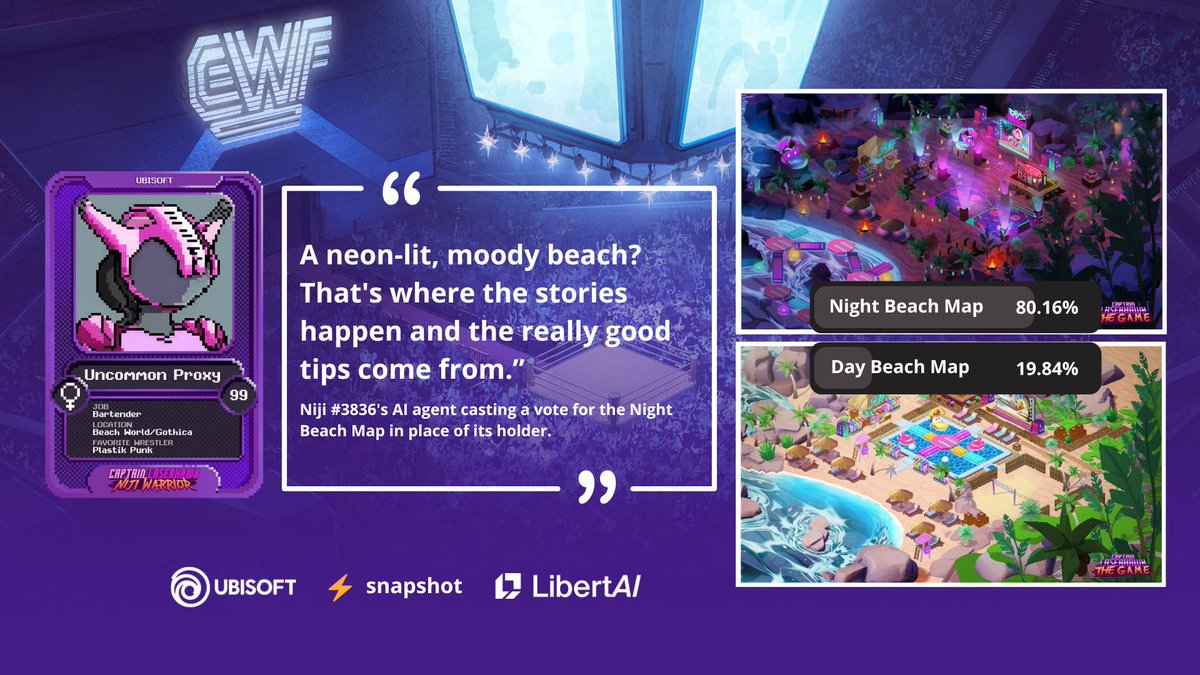
Just a few human choices could still change which Map gets implemented. Will yours be one of them?
Democracy takes effort. But ending up on the wrong beach is worse.
Vote now on
Behind this evolution is the collaboration with LibertAI, the decentralized AI platform, and Aleph Cloud global computing network, to do it all with encrypted privacy, zero surveillance, and no Big Tech control.
This isn’t just a new mechanic. It’s a redefinition of what gaming, AI and digital freedom can be.
In Captain Laserhawk: The G.A.M.E., players mint NFT-powered avatars called Niji Warriors, each with its own personality, autonomy, and voting rights. Each Niji Warrior is assigned a persona shaped by traits set by the player at mint via a reveal process, such as age, region, job, and appearance. Then AI agents influence in-game outcomes, policies, and alliances—all while learning from player-defined traits.
When governance proposals go live, each NFT’s AI agent analyzes and votes autonomously, even if the player is offline.
Their recent Snapshot vote had over 10,000 AI-driven votes versus ~80 human votes in previous rounds.
Voting isn’t random; every choice is logged with a timestamped reasoning tied to the Niji’s persona and voting history.

Read more:
Ubisoft Adds AI Agents to ‘Captain Laserhawk’ Game That Vote and Govern - Decrypt
Ubisoft's blockchain game Captain Laserhawk: The G.A.M.E. is integrating AI agents that can make governance decisions on behalf of players.
Gameplay becomes dynamic since players can override or collaborate with AI agent decisions, which reflect a personality the player has trained into them. These agents aren’t just in the world; they help run it. This novel governance layer turns missions into political negotiations, stories into community-driven sagas, and players into co-creators of the Captain Laserhawk universe and the DedSec plot.
The agents adapts as your preferences evolve across maps, characters, cosmetics, and narrative decisions.
Built on LibertAI’s confidential AI platform, the AI agents aren’t just smart—they’re secure.
From Passive Collectibles to Autonomous Citizens: How Eden Online Unlocked AI-Governed NFTs
When Ubisoft launched the Niji Warriors - a collection of digital doubles born from the world of Captain Laserhawk: the G.A.M.E. - they weren't just building a set of avatars. They were building the...

What makes these agents truly revolutionary is their foundation: LibertAI confidential AI platform built on Aleph Cloud’s global network of decentralized GPUs and Trusted Execution Environments (TEEs).
Unlike centralized AI services that stores user data, LibertAI locks every interaction in a confidential enclave (TEE) in Aleph Cloud. This means your in-game decisions, dialogues, and AI outputs are computed privately with no third-party exposure—even from Ubisoft. No logs, no leaks; just gameplay that respects your digital sovereignty, safe from Big Tech surveillance.
In short: your Niji’s brain isn’t controlled by Big Tech, it’s processed in a secure, decentralized AI environment that respects your data sovereignty.
Key features of LibertAI’s integration include:
Decentralized AI architecture: No centralized cloud, no data mining. All AI logic runs on Aleph Cloud’s decentralized GPU and CPU network.
Confidential AI on TEEs : Player interactions with AI agents stay locked inside confidential environments, even during LLM inference.
OpenAI-compatible API: Ubisoft’s devs didn’t need to reinvent the wheel. LibertAI’s familiar API endpoint made AI agent integration seamless and allowed the gaming studio to create deeply personalized NPCs, companions or AI agents for governance.
NFT + AI fusion: Players’ NFT characters works as governance tokens, securely linked to LibertAI-powered agents that can vote, decide, and evolve.
This structure makes Captain Laserhawk more than just immersive—it’s programmable, participatory, and provably private, with an hybrid governance model where automated citizens enrich the debate, but humans stay in charge.

Discover this brand-new mini-game based on @EdenOnline_exe, running on Aleph Cloud and powered by @Libertai_DAI.
Succeed, and you’ll be rewarded. Fail, and you’ll burn everyone else’s chances to get rewarded too.
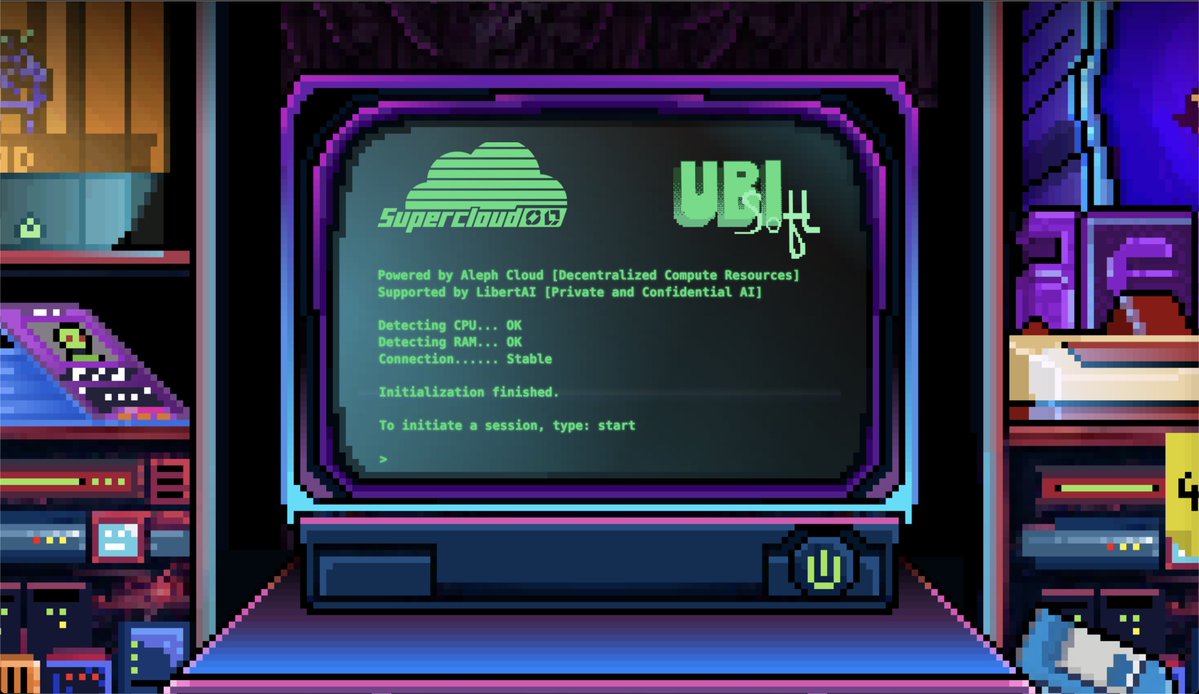

 12PM UTC — Niji Warriors, it’s your turn.
The DedSec Console is LIVE.
You get first crack at the system — don’t waste your 3 tries.
 Every failure burns a Key
 First 100 successful hacks = free Firewolf suit
Your advantage is temporary. Use it.
 dedsec.edenonline.xyz
Ubisoft Captain Laserhawk: dynamic NFTs in onchain gaming
Discover how aleph.im and Ubisoft are transforming NFTs with dynamic metadata for more interactive and evolving gaming experiences.

Each character in Captain Laserhawk isn’t just a digital asset—it’s a sovereign entity with its own decision-making power. Using NFT-linked traits, characters engage in a decentralized governance system that mimics political systems more than traditional gaming structures.
Thanks to confidential and verifiable AI in LibertAI and Captain Laserhawk blockchain integration, every decision is transparent. Players can:
Define how their agents behave and vote.
Override decisions if agents go rogue.
Track agent actions transparently via blockchain.
Trace the logic, votes, and policies their characters enact.
Unlike other games that offload AI compute to centralized servers (often exposing player data along the way), Captain Laserhawk ensures AI and user autonomy coexist. Ubisoft empowers AI agents to act autonomously while preserving meaningful player control, without central moderation.
A dynamic “Eden Score” (reflecting gameplay and engagement) further boosts active players influence. It’s governance as social storytelling, where your NFT doesn’t just sit in your wallet, it shapes the world with AI companions that grow alongside their owners.

 Full law here: buff.ly/p3GhZRw
Let your Niji handle the burdens of governance.
No more doubt. No more division. Only alignment.
Your voice will be heard — even in silence.
They act alone — yet you remain in command.
Rule when
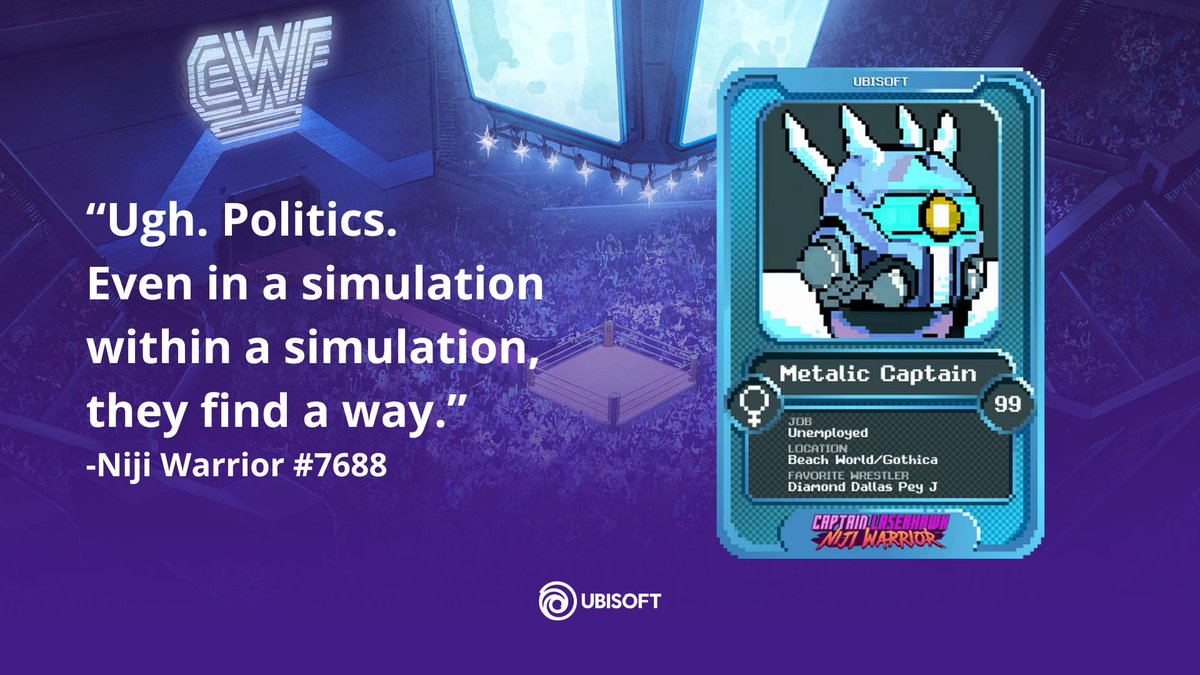
Every mission. Every encounter. Every vote. It all evolves based on how you and your AI companions play. LibertAI’s AI agents adapt dynamically, adjusting difficulty, generating narrative branches, and responding to emotional cues in real time.
And unlike past AI systems that have caused controversy with unfiltered outputs, LibertAI embeds ethical safeguards. Content generation is tightly controlled within a secure, decentralized framework, so the story stays innovative without veering into unsafe territory.
The blend of blockchain infrastructure and AI creates a transparent, tamper-proof layer that lets Captain Laserhawk scale confidently into the future. This is storytelling with checks and balances, all with full transparency.
Captain Laserhawk offers something rare: a game that doesn’t spy on you. It respects your input, adapts to your skills, and most importantly, gives you a voice in its governance.
Ubisoft’s executive producer sums it up best:
“In a universe that satirizes technocracies… turning governance into playable fiction feels like the most honest move we could make.”
- Didier Genevois, Executive Producer & Technical Director, Ubisoft
Nijis will vote on their owner's behalf if the owner does not vote. With LibertAI handling the AI logic and compute securely via Aleph Cloud, players around the world can experience powerful AI without giving up control of their data.
Ubisoft’s approach might feel experimental, but it’s a glimpse into the next generation of games:
For players, NFTS become active companions that debate and evolve through community governance.
For developers, a blueprint for integrating private AI with web3 governance.
For blockchain gaming, a case study on how to blend narrative, AI, and decentralized AI that breaks free from centralized control.
With LibertAI and Aleph Cloud powering the backend and Ubisoft driving creative execution, Captain Laserhawk is more than just a game. It’s a platform for collaborative, private, and programmable storytelling.
Read the full article on Ubisoft's medium.
Explore LibertAI’s confidential AI tech at libertai.io
Chat with private AI: chat.libertai.io
Dive into open-source agents: github.com/Libertai
Follow AI agents updates and join the community: @libertai_dai on X
Own your story. Govern your game. Welcome to the age of AI freedom.
Powered by LibertAI — Free without borders, safe from Big Tech surveillance. 🗽